Core evidence-based principles of healthy eating for long-term cardiovascular and metabolic health.
Diet Principles
Hydration
Water doesn’t offer nutritional value. However, it is essential for our body. Water helps the absorption of nutrients and excretion of unwanted substances from our body. It also helps regulate body temperature, cellular transport, and metabolism. Dehydration is a serious problem that could lead to fatigue, weakness, severe temperature imbalance (e.g., heat stroke).
A healthy individual may require up to 1.5 Liters of fluid, but the exact amount of water depends on many factors such as weather conditions, underlying medical status, and exercise intensity. Trying to drink only when one gets thirsty” is not a good idea as one is already dehydrated when thirsty. So, it would be best if one stayed hydrated gradually throughout the day by drinking fluids.
Understanding Nutrition Labels and Food Ingredients
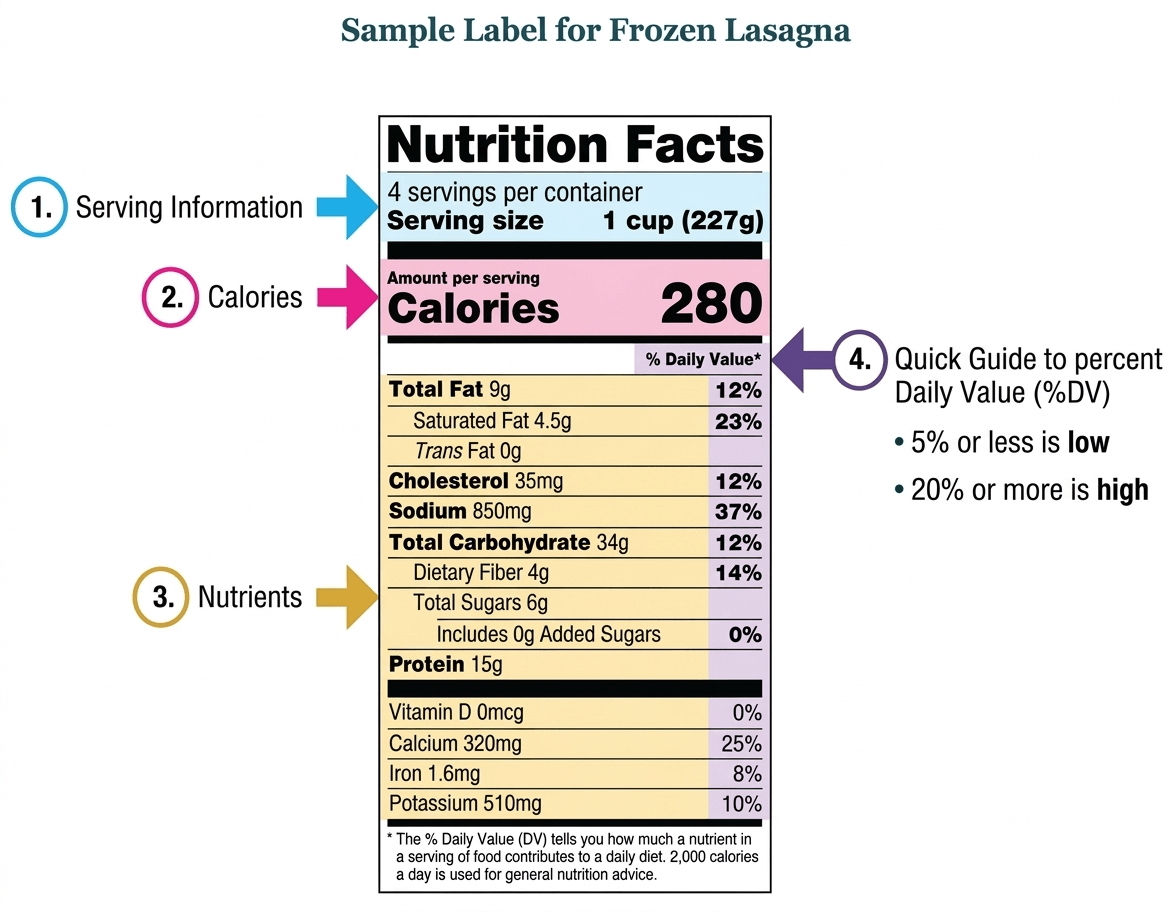
When looking at the food label, one should first look at the serving size and the number of servings in the container.
Second, one should look at the number of calories per serving.
Third, essential nutrients are listed with their daily percentage values.
Pay close attention to sodium and added sugars. The % Daily Value tells you the percentage of each nutrient in a single serving in the daily recommended amount.
To consume less of a nutrient (for example, sodium or sugar), choose foods with lower % Daily Values (<5%), and to consume more of a nutrient (for example, protein), choose foods with higher % Daily Values (>20%).
Understanding of Food Portion
The portion is how much food one eats at one time, but the serving size is the amount of food listed on the nutrition facts label. Therefore, all the nutritional values on the label are for the serving size the manufacturer suggests.
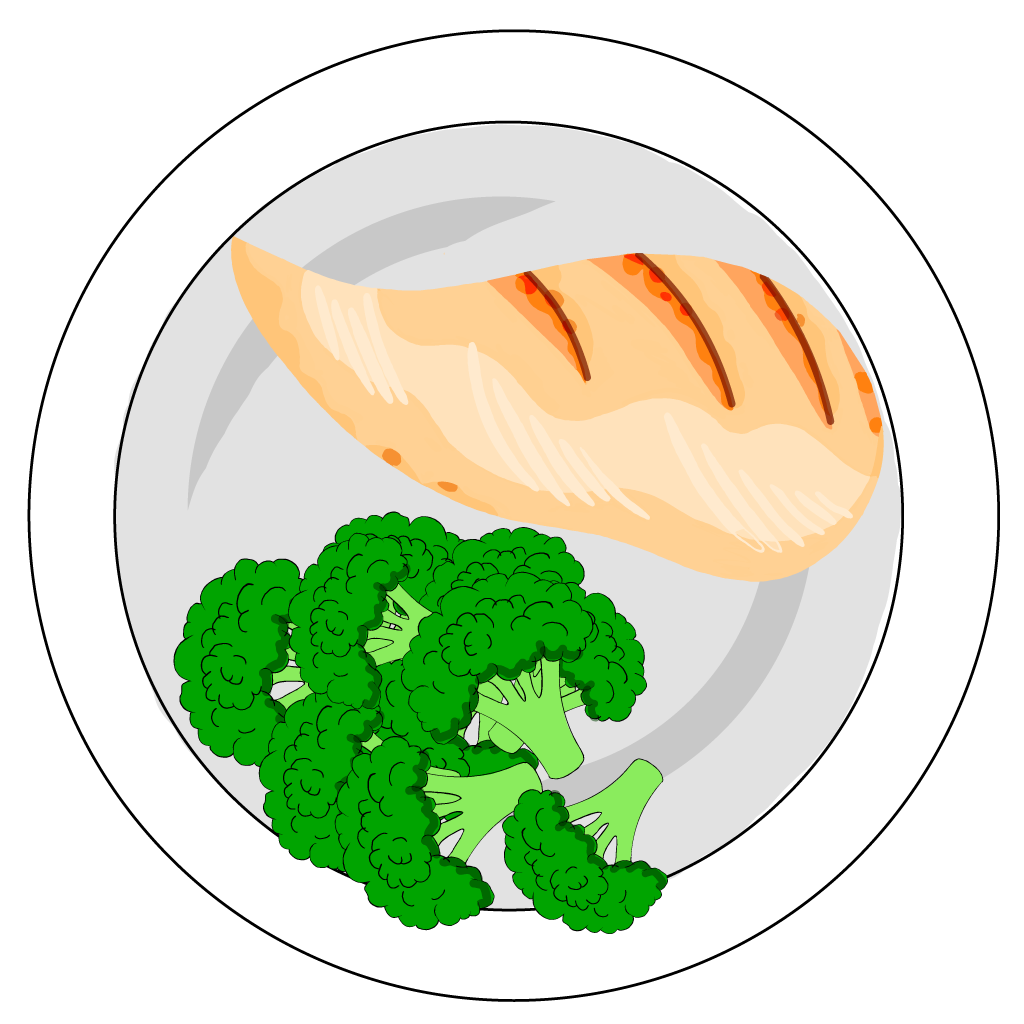
Portion control is essential for a healthy diet. Use small plates or bowls and use these as a portion guide.
Roughly half of the plate or bowl should be vegetables or salad.
The other half should be lean protein and complex carbohydrates with a quarter each, along with a tablespoon of healthy oil.
When eating out in a restaurant, one should ask for a half portion which will prevent overeating. Do not eat straight from the container or the package; instead, lay it out on a plate or bowl.
Using a food diary to note down the total intake in a day will increase awareness and motivate you to make healthier food choices.
Cooking at home and avoiding eating out should be the most important mantra for healthy living.
Daily Requirement of calories
Daily calorific requirement depends on weight, gender, pregnancy, activity level, and other health conditions.
Generally, 2500 calories a day for men and 2000 calories a day for women is considered adequate.
Glycemic Index
The glycemic index (GI) is a value of foods (on a scale of 1-100) based on how quickly the blood glucose level changes after you eat. Foods with a low GI have a longer digestion period with slower blood glucose release, while foods with a high GI are quickly digested, followed by larger increases in blood sugar levels.
Low GI food can promote weight loss and better blood glucose control, while high GI food helps those in the recovery phase after intense exercise or hypoglycemic episodes. If you have diabetes, it would be better to eat low GI food to promote sugar control.
The test is a two-day study and performed under a standardized protocol. A healthy individual was given 50 grams of carbohydrate (test), followed by blood glucose measurement after two hours. On the second day, the same individual was given 50 grams of pure glucose (reference), followed by glucose level measurement.
Then, the GI of the test food is calculated by dividing the glucose AUC for the test food by the glucose AUC for each person’s reference food, and the final GI value will be an average of the total participants. [1] University of Sydney, Australia, maintains the GI database.
The level of GI can be divided into 3 groups: low GI (0-50), medium GI (51-69), and high GI (70+).
Glycemic index is failed to specify the amount of particular you would need to eat to reach a certain level. E.g., watermelon has a GI of 80, which puts this food into a high GI category. However, watermelon has few digestible carbohydrates in a regular serving, and you would need to consume a lot of watermelons to raise your blood glucose level.
To modify this limitation, researchers developed a new measurement system called glycemic load (GL). GL calculates both the quality and quantity of the food being eaten.
Glycemic Load = GI x Carbohydrate (g) content per portion ÷ 100
GL can be classified as following (Per Sydney University):
Low: 10 or less
Medium: 11 – 19
High: 20 or more
Knowing the glycemic index of various foods would help you choose a diet that wouldn’t cause a sudden increase in blood sugar levels.
Carbohydrate consumption is critical for those who are aiming for bodyweight control or weight loss. The researcher attempted to compare effects of various diet compositions (a low-protein and low-glycemic-index diet, a low-protein and high-glycemic-index diet, a high-protein and low-glycemic-index diet, a high-protein and high-glycemic-index diet, or a control diet) on weight loss maintenance. In this study, the best result for weight loss and maintenance was achieved in high protein and low GI food. [2]
A meta-analysis of six randomized controlled trials was performed to compare the effect of a low glycemic index or load diet with a higher diet or other diets in overweight or obese people. It reported that lowering the diet’s glycemic load seems to be an effective method for weight loss and improving lipid profiles. [3]
Consumption of low glycemic index food appears to have cardiovascular risk factor modification by having better blood pressure and cholesterol control. The concept was tested by comparing the effects of low- and high-GI foods on 24-hour ambulatory blood pressure. The research study included 30 women who were given two different GI foods followed by 24-hour blood pressure measurement and revealed a significant reduction of BP (systolic –10.6 mmHg and diastolic –7.5 mmHg) with low GI foods. [4] Moreover, a meta-analysis of low GI diet effect on blood cholesterol level showed a reduction of total and LDL-cholesterol but no effect on HDL-cholesterol or triglycerides. [5]
On the contrary, another meta-analysis, including fourteen studies with 229,213 participants, reported that high GL and GI diets were associated with a significantly increased risk of cardiovascular disease, specifically for women. [6] Recently, Dr. Jenkins and his colleagues performed an analysis on a large, geographically diverse population living on five continents, with a median follow-up of 9.5 years. The result demonstrated again that a diet with a high glycemic index was associated with an increased risk of cardiovascular disease and death regardless of underlying comorbidities.[7]
The impact of various glycemic effects is thought to be one of the contributing factors to the development of diabetes. Meta-analysis showed that high GI diets could increase the risk of developing Type 2 diabetes by up to 87%. [8] Low GI diets were associated with better glycemic and body weight control in those with prediabetes or diabetes.[9] Although there is a concern for hypoglycemia with low GI diets, another study showed that low GI diets improve glucose control in diabetes individuals without increasing hypoglycemic events than conventional healthy diets.[10]
Pregnancy can cause various medical problems such as elevated blood pressure and gestational diabetes mellitus. As dietary control is the mainstay treatment of diabetes patients, clinicians wonder about the utility and safety of low GI diets in pregnancy. A meta-analysis of 9 randomized controlled trials of low GI diet in pregnancy-related DM showed a beneficial effect of less frequent insulin use and lower birth weight than control diets. [11]
**Glycemic Index chart of Various Foods (Fruits, Vegetables, Legumes, Dairy, Grains/Starches, Sweets) **
Vegetables
Glycemic Index
Beetroot
64
Green Beans
15
Tomatoes
15
Spinach
15
Lettuce
15
Kale
5
Brussels Sprouts
6
Cabbage
10
Tomato
15
Onions
10
Peppers
15
Cucumber
15
Broccoli
15
Asparagus
15
Celery
15
Carrot (Cooked)
39
Mushroom
10
Potato
56
Sweet Potato
61
Baked Potato
85
Parsnips
97
Fruits
Glycemic Index
Apple
38
Peach
42
Oranges
44
Grapes
46
Banana
54
Mango
56
Pineapple
59
Watermelon
72
Grapefruit
25
Cherries
22
Pear
38
Kiwi
53
Apricots
57
Raisins
64
Raspberries
30
Cantaloupe
65
Legumes
Glycemic Index
Peanuts
21
Lentils
41
Kidney Beans
41
Split Peas
45
Black Beans
59
Lima Beans
46
Chickpeas
47
Pinto Beans
55
Soybeans
16
Dried Beans
40
Green Peas
48
Dairy
Glycemic Index
Cheese
0
Butter
0
Plain Yogurt
14
Low-fat yogurt
14
Whole Milk
27
Skim Milk
32
Soy Milk
30
Fat-Free Milk
32
Fruit Yogurt
36
Plain Ice Cream
61
Grains/Starches
Glycemic Index
White Rice
85
Brown Rice
50
Wild Rice
57
French Fries
75
Cheerios
74
Cornflakes
80
Popcorn
55
Quinoa
53
Sweets
Glycemic Index
Fructose
15
Agave Syrup
15
Coconut Sugar
35
Maple Syrup
54
Caramel
60
Honey
61
Sucrose
65
Splenda (artificial)
80
Coca-Cola
70
Jelly Beans
80
Chocolate Bars
70
Glucose
100
Glycemic Index of various foods based on level
Type of Food
Glycemic Index
Cheese
0
Butter
0
Kale
5
Brussels Sprouts
6
Spinach
6
Onions
10
Mushroom
10
Broccoli
10
Cabbage
10
Plain Yogurt
14
Low-fat yogurt
14
Green Beans
15
Tomatoes
15
Lettuce
15
Peppers
15
Cucumber
15
Asparagus
15
Celery
15
Tomato
15
Fructose
15
Agave Syrup
15
Soybeans
16
Artichokes
20
Peanuts
21
Cherries
22
Grapefruit
25
Whole Milk
27
Raspberries
30
Soy Milk
30
Skim Milk
32
Fat-Free Milk
32
Coconut Sugar
35
Fruit Yogurt
36
Apple
38
Pear
38
Carrots, cooked
39
Dried Beans
40
Lentils
41
Kidney Beans
41
Peach
42
Bran Cereal
42
Spaghetti
42
Oranges
44
Split Peas
45
Grapes
46
Lima Beans
46
Chickpeas
47
Green Peas
48
Brown Rice
50
Kiwi
53
Quinoa
53
Banana
54
Corn, sweet
54
Maple Syrup
54
Pinto Beans
55
Popcorn
55
Mango
56
Potato
56
Apricots
57
Wild Rice
57
Basmati Rice
58
Pineapple
59
Black Beans
59
Caramel
60
Sweet Potato
61
Plain Ice Cream
61
Couscous
61
Sweet Potatoes
61
Honey
61
Raisins
64
Beets
64
Cantaloupe
65
Sucrose
65
Coca-Cola
70
Chocolate Bars
70
Whole Bread
71
Watermelon
72
Mashed Potatoes
73
Cheerios
74
French Fries
75
Cornflakes
80
Splenda (artificial)
80
Jelly Beans
80
Baked Potato
85
White Rice
85
Baked Potatoes
85
Instant Oatmeal
87
Parsnips
97
Taco Shells
97
Glucose
100
Bagel, white
103
The lower the glycemic index, the lesser effect on blood glucose and insulin levels while the higher GI score can result in higher blood sugars level quickly.
Larsen TM, Dalskov SM, van Baak M, Jebb SA, Papadaki A, Pfeiffer AF, Martinez JA, Handjieva-Darlenska T, Kunešová M, Pihlsgård M, Stender S, Holst C, Saris WH, Astrup A; Diet, Obesity, and Genes (Diogenes) Project. Diets with high or low protein content and glycemic index for weight-loss maintenance. N Engl J Med. 2010 Nov 25;363(22):2102-13. doi: 10.1056/NEJMoa1007137. PMID: 21105792; PMCID: PMC3359496.
Thomas DE, Elliott EJ, Baur L. Low glycaemic index or low glycaemic load diets for overweight and obesity. Cochrane Database Syst Rev. 2007 Jul 18;(3):CD005105. doi: 10.1002/14651858.CD005105.pub2. PMID: 17636786.
Hosseininasab M, Norouzy A, Nematy M, Bonakdaran S. Low-Glycemic-Index Foods Can Decrease Systolic and Diastolic Blood Pressure in the Short Term. Int J Hypertens. 2015;2015:801268. doi:10.1155/2015/801268. Epub 2015 Oct 5. PMID: 26509082; PMCID: PMC4609819.
Goff LM, Cowland DE, Hooper L, Frost GS. Low glycaemic index diets and blood lipids: a systematic review and meta-analysis of randomised controlled trials. Nutr Metab Cardiovasc Dis. 2013 Jan;23(1):1-10. doi: 10.1016/j.numecd.2012.06.002. Epub 2012 Jul 25. PMID: 22841185.
Ma XY, Liu JP, Song ZY. Glycemic load, glycemic index and risk of cardiovascular diseases: meta-analyses of prospective studies. Atherosclerosis. 2012 Aug;223(2):491-6. doi: 10.1016/j.atherosclerosis. 2012.05.028. Epub 2012 Jun 6. PMID: 22727193.
Jenkins, David JA, Mahshid Dehghan, Andrew Mente, Shrikant I. Bangdiwala, Sumathy Rangarajan, Kristie Srichaikul, Viswanathan Mohan et al. “Glycemic Index, Glycemic Load, and Cardiovascular Disease and Mortality.” New England Journal of Medicine (2021).
Livesey, Geoffrey, Richard Taylor, Helen F. Livesey, Anette E. Buyken, David JA Jenkins, Livia SA Augustin, John L. Sievenpiper et al. “Dietary glycemic index and load and the risk of type 2 diabetes: Assessment of causal relations.” Nutrients 11, no. 6 (2019): 1436.
Zafar, Mohammad Ishraq, Kerry E. Mills, Juan Zheng, Anita Regmi, Sheng Qing Hu, Luoning Gou, and Lu-Lu Chen. “Low-glycemic index diets as an intervention for diabetes: a systematic review and meta-analysis.” The American journal of clinical nutrition 110, no. 4 (2019): 891-902.
Thomas D, Elliott EJ. Low glycaemic index, or low glycaemic load, diets for diabetes mellitus. Cochrane Database Syst Rev. 2009 Jan 21;2009(1):CD006296. doi: 10.1002/14651858.CD006296.pub2. PMID: 19160276; PMCID: PMC6486008.
Viana LV, Gross JL, Azevedo MJ. Dietary intervention in patients with gestational diabetes mellitus: a systematic review and meta-analysis of randomized clinical trials on maternal and newborn outcomes. Diabetes Care. 2014 Dec;37(12):3345-55. doi: 10.2337/dc14-1530. PMID: 25414390.