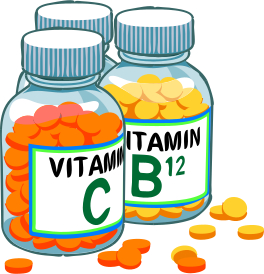
Essential vitamins, their roles in the body, and how they support cardiovascular and overall health.
Vitamins
What are vitamins?
Vitamins are organic materials that are required in small amounts for optimal metabolism in humans. Most vitamins can't be made in the body and must be obtained from the diet or additional supplements.
Are vitamins good for our body and health?
Overall, vitamins are beneficial for humans; however, moderation is key. Some vitamins are necessary for our wellbeing; however, others can cause harm if consumed in excessive amounts.
There are numerous vitamins; only 13 vitamins are categorized as essential because they cannot be created by humans and must be provided through diet. This emphasizes that having a balanced diet is an essential first step before you start taking vitamin supplements.
The 13 essential vitamins are: Vitamin A, Vitamin C, Vitamin D, Vitamin E, Vitamin K, Vitamin B1 (thiamine), Vitamin B2 (riboflavin), Vitamin B3 (niacin), Pantothenic acid (B5), Vitamin B6, Biotin (B7), Folate (folic acid and B9), Vitamin B12 (cyanocobalamin).
Two Categories of Vitamins
1. Fat-Soluble Vitamins
Stored in body fat and the liver. Can accumulate to toxic levels if over-consumed.
Vitamin A is a fat-soluble vitamin and is involved in immune function, vision, reproduction, and cellular communication. It is essential for vision as a necessary component of rhodopsin, a protein that absorbs light in the eye's retinal receptors. It also supports cell growth and differentiation, playing a critical role in the normal formation and maintenance of the heart, lungs, kidneys, and other organs.
Daily Requirement: 900 mcg RAE for men (equivalent to 3,000 IU) · 700 mcg RAE for women (equivalent to 2,333 IU) (adults 19+)
Foods that contain Vitamin A:
Liver, fish oils, milk, eggs, dairy products, fortified cereals
Foods that contain provitamin A:
Carrots, broccoli, cantaloupe, squash, leafy green vegetables, orange and yellow vegetables, tomato products
Deficiency: Eye problems and night blindness.
Too much Vitamin A can be toxic.
Toxicity symptoms: Skin manifestations (dermatitis, color changes), psoriasis, dry mucosa, damage to the liver and nervous systems.
Vitamin D, known as calciferol, is a fat-soluble vitamin that the human body can produce in response to ultraviolet rays from the sun. It enhances calcium absorption and helps maintain bone and teeth synthesis and muscle functions. Vitamin D is best described as a prohormone as it requires activation by the liver and kidneys before becoming biologically active.
Daily Requirement: 15 mcg (600 IU) for adults · 20 mcg (800 IU) for adults 70+
Roles of Vitamin D:
Maintain bone and teeth health
Support nervous system and immune function
Help manage sugar control and insulin levels
Improve cardiac and lung functions
Food sources: Fish (trout, salmon, tuna, mackerel), fish liver oils, fortified milk, cereals and juices, eggs, cheese, mushrooms.
Deficiency causes: Limited sun exposure, darker skin, bariatric surgery, infants.
Deficiency symptoms: Mood changes (low mood, fatigue), hair loss, delayed wound healing, bone pain, muscle pain, increased susceptibility to infection.
Vitamin E is a fat-soluble vitamin that possesses antioxidant activity. Although more scientific evidence is needed, it is believed to have several beneficial effects on heart health, cancer, eye health, hair health, and brain functioning. It is also available in supplement form.
Daily Requirement: 15 mg for adults · 15 mg during pregnancy · 19 mg during lactation
Food sources: Nuts, seeds, and vegetable oils are among the best sources. Significant amounts are also available in green leafy vegetables and fortified cereals. Most vitamin E in American diets comes from soybean, canola, corn, and other vegetable oils.
Deficiency: Rarely causes deficiency in healthy adults.
Vitamin K is a fat-soluble vitamin found in two forms. Phylloquinone (Vitamin K1) is found in green leafy vegetables. Menaquinones (Vitamin K2) are found in animal foods and fermented foods and can be produced by bacteria in the human body. Vitamin K plays a significant role in blood clotting, calcium, and bone metabolism.
Daily Requirement: 120 mcg for adult men · 90 mcg for adult women · 90 mcg during pregnancy and lactation
Food sources: Spinach, broccoli, iceberg lettuce, kale, collard greens, soybean and canola oil, meat, dairy, eggs, fermented foods like cheese.
Deficiency: Increased risk of bleeding (under the skin, from the gut, brain).
Treatment: Oral or IV injection of Vitamin K.
2. Water-Soluble Vitamins
There are nine water-soluble vitamins. They easily dissolve in water and are eliminated in urine. As a result, they cannot be stored in the body and have to be replenished daily through our diet. They include ascorbic acid (vitamin C), thiamin, riboflavin, niacin, vitamin B6, folacin, vitamin B12, biotin, and pantothenic acid.
Thiamin (Vitamin B1) is one of the water-soluble B vitamins. Thiamin is naturally present in foods and also available as a dietary supplement.
Vitamin B1, or thiamin, involves cellular metabolism of the brain, muscle, heart, stomach, and intestines. It is also involved in the process of balancing electrolytes among muscle and nerve cells. Moreover, it helps prevent diseases (i.e., beriberi, which involves disorders of the heart, nerves, and digestive system).
Daily Requirement: 1.2 mg for men · 1.1 mg for women · 1.4 mg during pregnancy and lactation
Breakfast cereals and products made with white flour or white rice are usually enriched with vitamin B. In the United States, around half of their vitamin B1 intake comes from naturally occurring foods, although it can be fortified in various food items.
Vitamin B1 Deficiency
B1 deficiency could lead to a condition called beriberi which can be categorized into wet beriberi and dry beriberi.
Wet beriberi: affects the heart and circulatory system
Dry beriberi: affects the nervous system — numbness of hands and feet, confusion, trouble moving legs, pain
Riboflavin (vitamin B2) is one of the B vitamins and water-soluble one. Riboflavin is naturally present in some foods, added to some food products and available as a dietary supplement.
This vitamin is an essential component of two significant coenzymes, flavin mononucleotide (FMN; also known as riboflavin-5′-phosphate) and flavin adenine dinucleotide (FAD). These coenzymes play significant roles in energy production, cellular function, growth and development, and metabolism of fats, drugs, and steroids.
Daily Requirement: 1.3 mg for men · 1.1 mg for women · 1.4 mg during pregnancy · 1.6 mg during lactation
Niacin (Vitamin B3) is the generic name for nicotinic acid (pyridine-3-carboxylic acid), nicotinamide (niacinamide or pyridine-3-carboxamide), and related derivatives, such as nicotinamide riboside.
Niacin plays a role in keeping skin, hair, and nervous system healthy.
Niacin is naturally present in many foods, added to some food products and available as a dietary supplement.
Daily Requirement: The National Institutes of Health (NIH) recommend 16 mg for adult males and 14 mg for adult females, 18 mg during pregnancy and 17 mg during lactation.
Deficiency: Deficiency of Vitamin B3 can cause Pellagra that consists of various skin symptoms, fatigue, diarrhea, and memory loss.
Pantothenic acid (Vitamin B5) helps turn the food you eat into energy. It is crucial for making and breaking down fats, and also supports healthy skin, eyes, and liver.
Daily Requirement: 5 mg for adults · 6 mg during pregnancy · 7 mg during lactation
Vitamin B6 is highly versatile, with involvement in more than 100 enzyme reactions. It plays a role in cognitive development through neurotransmitter biosynthesis, glucose metabolism, immune function, and hemoglobin formation.
Daily Requirement: 1.3 mg for adults · 1.9 mg during pregnancy · 2.0 mg during lactation
Deficiency signs and symptoms: Anemia, depression, higher risk of infection due to decreased immunity, peripheral neuropathy, confusion.
Biotin (Vitamin B7) is an essential nutrient involved in the metabolism of fatty acids, glucose, and amino acids. It helps maintain the health of hair, nails, and fetal health during pregnancy.
Daily Requirement: 30 mcg for adults · 30 mcg during pregnancy · 35 mcg during lactation
Deficiency: Relatively rare. Eating only raw eggs may cause biotin deficiency. Associated with various skin, hair, and nail problems.
Folate (Vitamin B9) acts as a coenzyme to synthesize genetic material such as DNA and amino acids. It is crucial for cellular metabolism and prenatal health. Folate is also a key ingredient in red blood cell production — deficiency can lead to megaloblastic anemia, causing fatigue and weakness.
Daily Requirement: 400 mcg DFE for adults · 600 mcg DFE during pregnancy · 500 mcg DFE during lactation
At-risk individuals: Chronic alcohol users, pregnant women, those with intestinal absorption problems, certain genetic diseases.
Vitamin B12 (cobalamin) is an essential nutrient involved in various cellular metabolisms. It plays a significant role in keeping nerve tissues and blood cells healthy.
Daily Requirement: 2.4 mcg for adults · 2.6 mcg during pregnancy · 2.8 mcg during lactation
The human body can store extra fat b12 for up to four years, and any excess fat B12 is removed via the urine.
Vitamin C (L-ascorbic acid) is a water-soluble vitamin that maintains skin, bones, and blood vessels. Humans, unlike most animals, are unable to synthesize it and must obtain it from diet. Ongoing research is being performed to determine if Vitamin C might help prevent or delay certain cancers and cardiovascular disease.
Our body needs Vitamin C for:
Biosynthesis of collagen
Physiological antioxidant
Enhanced immune system
Improved wound healing
Iron absorption
Daily Requirement: 90 mg for men · 75 mg for women · 85 mg during pregnancy · 120 mg during lactation
Food sources: Citrus fruits, tomatoes and tomato juice, potatoes, red and green peppers, kiwifruit, broccoli, strawberries, brussels sprouts, cantaloupe.
Deficiency — Scurvy: Bruising, bleeding gums, weakness, fatigue, skin rash and red spots, loss of appetite, muscle pain.
References
Johnson EJ, Russell RM. Encyclopedia of Dietary Supplements. 2nd ed. Informa Healthcare; 2010:115-20.
Institute of Medicine. Dietary Reference Intakes for Vitamin A, Vitamin K, Arsenic, Boron, Chromium, Copper, Iodine, Iron, Manganese, Molybdenum, Nickel, Silicon, Vanadium, and Zinc. National Academy Press; 2001.